Home » What is Judo?
Judo isn’t just a martial art; it’s an electrifying Olympic sport that captivates nations across the globe!
Picture this: countries from every corner of the world, coming together in a display of skill, strength, and spirit, making judo the second most popular sport on the planet. It’s not merely about physical prowess; it’s a dynamic dance of strategy, where you harness your opponent’s strength and balance to your advantage.
But judo is more than just a sport; it’s a way of life, guided by a noble moral code emphasising self-discipline, courtesy, courage, friendship, honesty, and honour.
Dive into the world of judo with us, where we specialise in two exhilarating types: Tachi-waza and Ne-waza.
Tachi-waza, our standing judo, is a thrilling spectacle of throws and takedowns. Forget about striking—there’s no punching or kicking here. Instead, we focus on the art of grappling, using precise techniques to off-balance or lift your opponent, aiming to land them on their back with skill and finesse.
Then there’s Ne-waza, the ground-based judo, where the action gets up close and personal. Here, you’ll learn to pin and control your opponent, mastering the art of immobilisation. In a contest, pinning your opponent for 20 seconds could secure your victory. And for those in senior judo, the challenge intensifies with the permission to apply armlocks, chokes, and strangles, pushing the limits until submission.
Whether you’re a judo enthusiast or new to the world of martial arts, our dojo welcomes you to experience the thrill, discipline, and camaraderie of judo. Join us and discover the strength within!
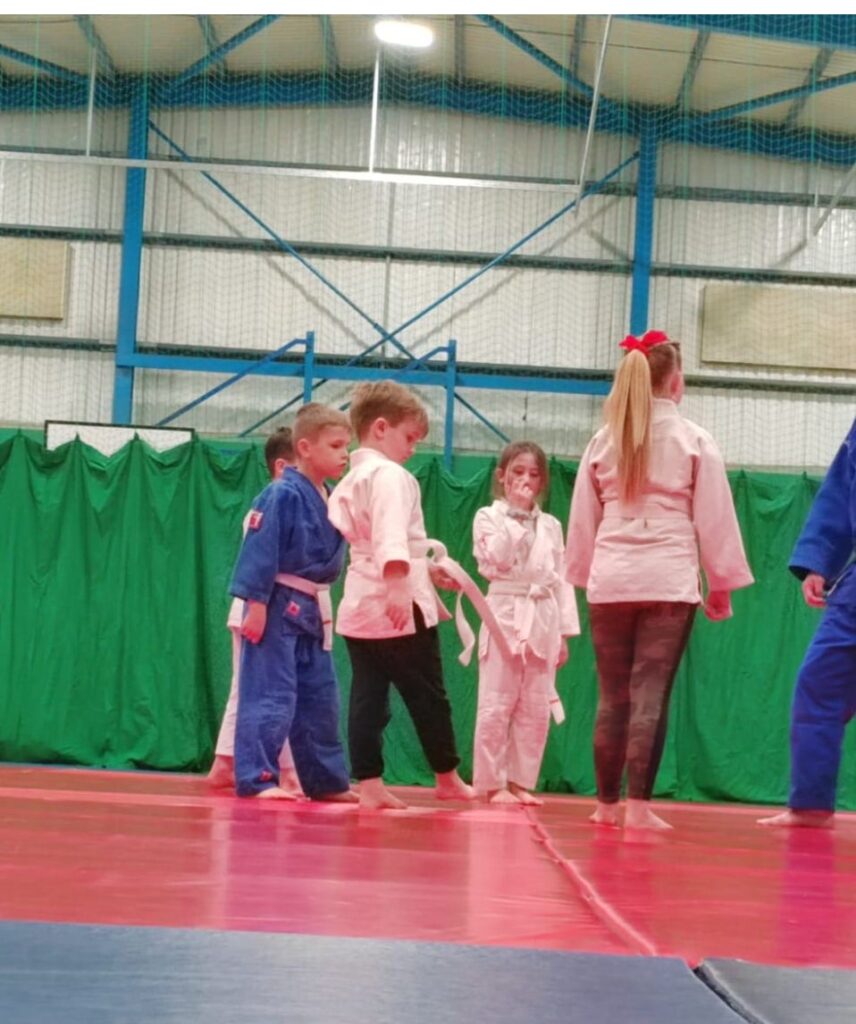
Our teaching approach is focused on a balanced mix of technical instruction, practical application, and personalized feedback.
We start with the fundamentals of stance, movement, and basic techniques, gradually progressing to more complex skills as students gain confidence and proficiency.
Classes are structured to include warm-ups, drills, technique demonstration and practice, sparring sessions for advanced students, and cool-downs.
Our instructors emphasize respect, discipline, and perseverance, fostering a supportive community where students are encouraged to ask questions, learn from mistakes, and celebrate progress.
Between the 12th and 19th centuries, Japan was under the rule of the samurai, a class of elite warriors. This era became a crucible for the development of martial arts, as these skilled fighters honed their abilities not just with swords and bows but also in the art of close combat.
The samurai’s need for effective hand-to-hand combat techniques on the battlefield led to the evolution of jujitsu. This martial art, with its various styles, became a cornerstone of military training, emphasizing the importance of close-quarter combat skills.
However, the samurai era drew to a close with the Meiji Restoration in 1868, ushering in a wave of Western influence on Japanese society. As the country modernized, traditional practices like jujitsu began to wane. But just when it seemed like jujitsu might fade into history, the passion and vision of a young man breathed new life into it.
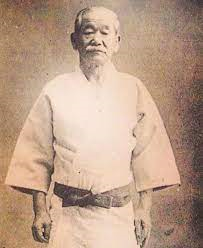
Enter Jigoro Kano, a man who, despite his academic brilliance, felt overshadowed by his slight build. At 17, Kano sought to overcome his physical limitations by becoming a disciple of Yanosuke Fukuda, a master of the Tenjin Shin’yo-ryu, a school of jujitsu. His dedication to mastering the art transformed not only his physique but also his life’s path.
By the age of 21, in May 1882, Kano achieved a groundbreaking feat. He synthesized the finest elements of various jujitsu styles into a cohesive whole, laying the foundation for what we now recognize as modern judo. This wasn’t just the creation of a new martial art; it was the birth of a legacy that would carry the essence of the samurai spirit into the modern world, transcending the boundaries of time and culture.
The journey of judo from Japan to the UK is a fascinating story of cultural exchange and passion. Central to this tale is Gunji Koizumi, known as the “Father of British Judo,” who founded the Budokwai in London in 1918, the oldest judo club in Europe. Koizumi’s efforts, combined with the influential visits of Jigoro Kano, the founder of judo, helped to establish a strong foundation for the sport in the UK.
Kano’s visits in the 1920s and 1930s, where he gave lectures and demonstrations, significantly raised judo’s profile in Britain. This, alongside the dedication of both Japanese and British judo experts, spurred the growth of judo clubs across the country and led to the formation of national organizations dedicated to the sport.
By the mid-20th century, judo was well-established in the UK, with British judoka making their mark internationally, especially after judo’s inclusion in the Olympic Games in 1964. The story of judo’s arrival in the UK underscores the power of cultural exchange and the appeal of judo’s discipline, respect, and physical prowess.
It shows how the vision and dedication of individuals can introduce and root a rich cultural tradition far from its original home.